
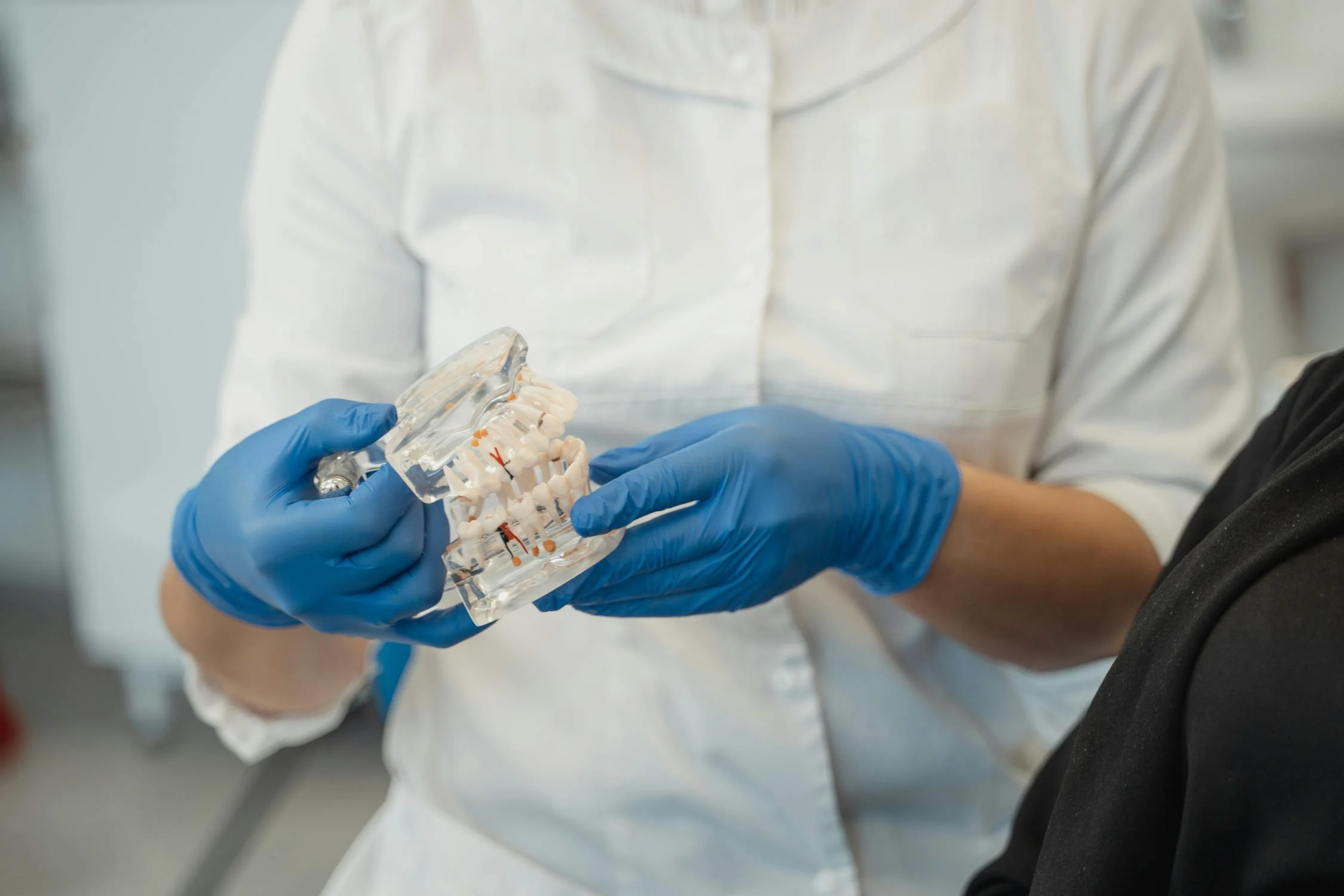
Denture Relines
New dentures will typically fit your mouth very securely as it has been designed specifically for your gums. As time goes on, your gum tissues will change and the fit of the denture will become more loose and thus more prone to movement inside your mouth. Having the denture professionally relined every one to two years will keep the denture secure and functional.
Hard Denture Reline
All full dentures should have a hard reline every two years. We will remove a layer of plastic from the dentures interior surface, and then fills the denture with a putty-like material which conforms to the contours of your mouth creating an accurate impression. The denture is sent to the lab where it is adjusted to the new shape of your gum tissue. This results in maximum contact between the denture and your mouth.
Soft Denture Reline
Some patients are unable to wear ordinary dentures because of tender gums or sore spots. Dr. Pyle and Dr. Jasmine may recommend relining the denture with a material that stays pliable for one to two years before needing replacement. This material is much less likely to give the patient sore spots than the standard hard reline acrylic. Patients experiencing these problems may also consider a more permanent solution of implant retained dentures.
Temporary Relines
If dentures have not been serviced in quite some time, a patient’s gums may be red, swollen, or misshapen. This creates problems in taking impressions for a new hard or soft reline and may lead to a denture that would perpetuate the problem.
A temporary, or palliative (medicated) reline material may be recommended to allow the inflammation to subside. This reline makes the denture fit much more tightly, and is usually soft and pliable. After a few weeks, the gums return to a more normal state. The patient is then ready for his new denture or hard reline.
Other Types of Denture
immediate dentures Implant Retained Dentures Partial Dentures Denture Care Exams & Maintenance Denture Relines Rebase & Repairs Soft LinersExperience Care that Puts You First
Why is Preventive Dentistry Important?
Preventive dentistry’s value lies in early detection and intervention. By identifying issues early, treatments can be simpler, less invasive, and more cost-effective. Moreover, preventive measures reduce the risk of losing teeth, ensuring the durability of natural teeth.
Reach Out to Us!
Ensuring good oral health is a continuous commitment, and preventive measures are a central component. Saint Louis Dental Studio in Saint Louis, MO, provides a comprehensive range of dental preventive care services to cater to individual needs. Contact us today to schedule your appointment and take proactive steps toward optimal oral health.

faqs

Q: What is a denture reline?
A: A denture reline reshapes the underside of the denture to restore a secure fit against the gums. It removes worn material and replaces it so the denture hugs the mouth again.
Q: Why would a denture need relining?
A: Gum and jaw shapes change over time. That causes loose fit, sore spots, difficulty chewing, and risk of infection. Relining corrects fit problems and relieves discomfort.
Q: How often should dentures be relined?
A: A hard reline is generally recommended every two years. Soft relines may last 18 months to two years depending on wear. Frequency depends on changes in gum and bone shape.
Q: What are the types of denture relines?
A: There are three types:
Hard relines use rigid material that lasts longer.
Soft relines use flexible polymer for comfort, especially on tender gums.
Temporary relines help when gums are inflamed and need time to heal.
Q: Is a denture reline done in one visit?
A: Soft relines are often completed in a single visit because the material sets quickly. Hard relines may require lab work and take longer—sometimes several days.