
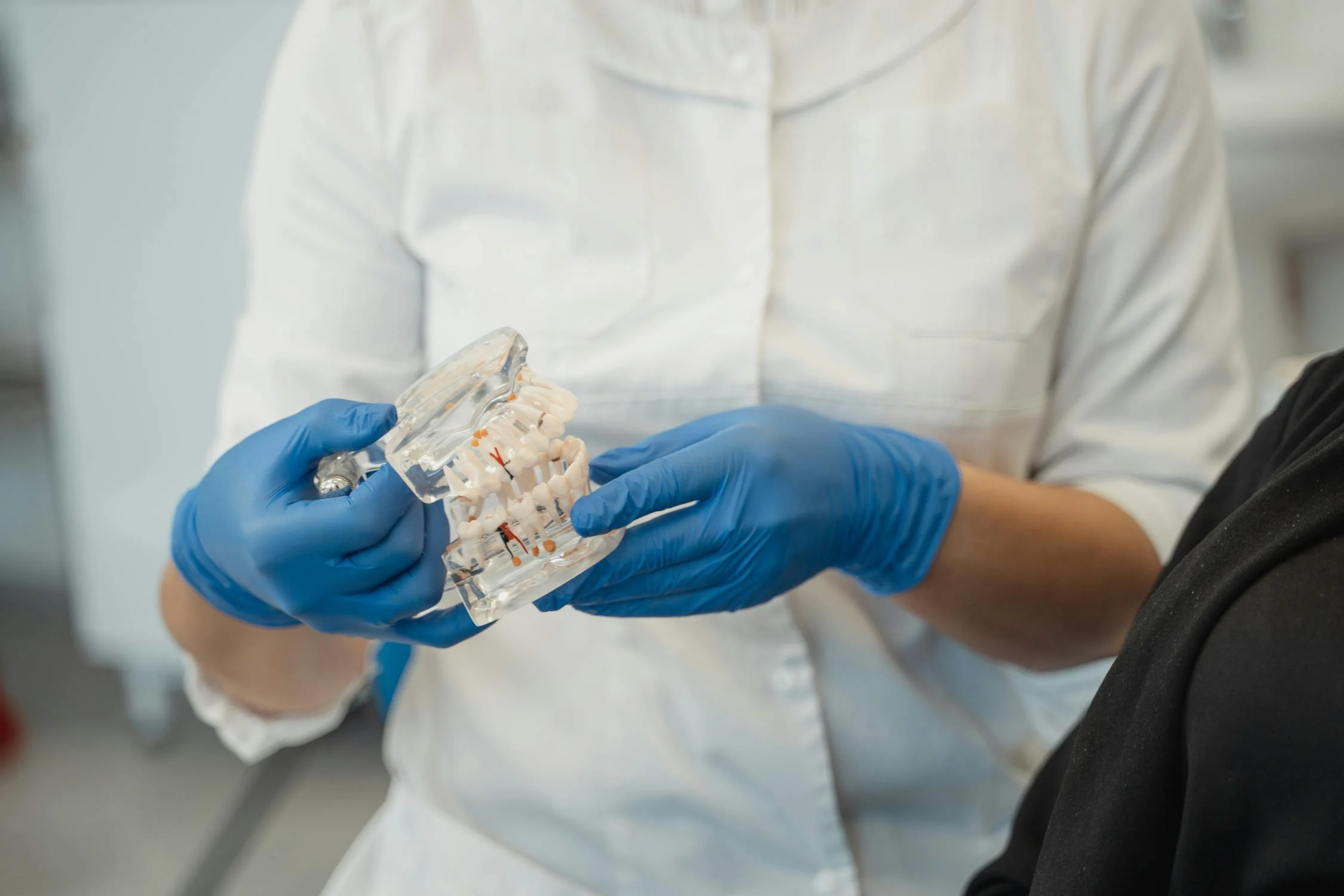
Implant Retained Dentures
Replacing missing teeth with implant retained dentures
Usually, when you lose a tooth, it is best for your oral health to have it replaced. Missing teeth can affect your “bite” as well as your ability to speak and chew. Their loss can increase the burden on your remaining teeth and can cause muscle pain in your jaws and headaches. And of course, losing a tooth can affect your appearance. The following information reviews replacing missing teeth with an implant retained denture.
Although many patients have no problem wearing an upper denture, some people find it difficult to wear and eat with lower dentures. Several implant-supported replacement options are available if you are missing all of your lower teeth.
What if I’m missing all of my lower teeth?
Ball Attachment Denture
One option is to have two implants placed in your lower jaw and a denture made that snaps onto these dental implants. This option allows your lower denture to be more stable while chewing than without implants. However, there will still be movement of your lower denture, and sore spots will occur if any food particles, especially seeds, are caught under it. As with all removable replacement teeth, you still will need periodic appointments for denture adjustment.
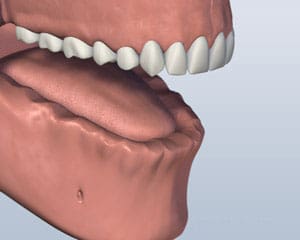
Before
A mouth with the lower jaw missing all of its teeth.

Implants Placed
A mouth with the lower jaw with two implants and no bottom teeth.

Denture Attached
A mouth with a Ball Attachment Denture latched onto the lower jaw by two implants.
Bar Attachment Denture
Another option involves placing four to six implants, depending on your jaw size or shape, into your lower jaw. After healing is complete, the implants are connected with a custom-made support bar. Your denture will be made with special internal retention clips that attach onto the support bar, enabling the denture to snap firmly into place. This is called an “overdenture.” The advantage of this option is that it is much more stable than the first option and allows very little denture movement. Your denture is still removable for easy cleaning and maintenance.
Bar Attachment Denture
Another option involves placing four to six implants, depending on your jaw size or shape, into your lower jaw. After healing is complete, the implants are connected with a custom-made support bar. Your denture will be made with special internal retention clips that attach onto the support bar, enabling the denture to snap firmly into place. This is called an “overdenture.” The advantage of this option is that it is much more stable than the first option and allows very little denture movement. Your denture is still removable for easy cleaning and maintenance.

Before
A mouth that has all teeth missing on its lower jaw.
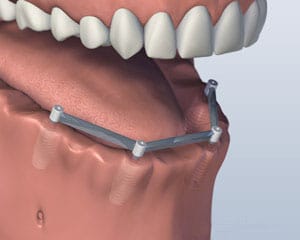
Implants Placed
A mouth that has six implants and no teeth on its lower jaw.

Denture Attached
A mouth with a Screw Attachment Denture affixed onto the lower jaw by six implants.
Screw Retained Denture
A third option involves placing five or more implants in your jaw and attaching a permanent denture. Your denture is held in place by screws or clasps that secure it to the support posts or bar. It doesn’t touch the gum tissue, which allows you to clean under the denture without removing it. This denture will replace all your missing lower teeth and will not be removed except at maintenance visits. Although cleaning under your denture without removing it is more time consuming and requires more dexterity, many patients who want a permanent denture prefer this option.

Before
A mouth that has all lower jaw teeth missing.

Implants Placed
A mouth that has six implants and no teeth on its lower jaw.

Dentures Attached
A mouth with a Screw Attachment Denture affixed onto the lower jaw by six implants.
What If I’m Missing All Of My Upper Teeth?
A similar range of treatment options is also available for your upper jaw. However, because the bone is not as hard as that in the lower jaw, people often need more implants to support their new replacement teeth. Depending upon the number of implants to be placed, it may be possible to eliminate the need for covering the roof of your mouth with a complete denture. This option allows you to fully taste your food and gives you a better sense of its temperature. Your denture will feel more natural. You will still have a removable denture, which makes cleaning the support bar and denture much easier.

An Implant Retained Upper Denture with its implants attached.
Implant Retained Upper Denture
Depending upon the number of implants to be placed, it may be possible to eliminate the need for covering the roof of your mouth with a complete denture. This option allows you to fully taste your food and gives you a better sense of its temperature. Your denture will feel more natural. You will still have a removable denture, which makes cleaning the support bar and denture much easier.
Implant benefits
- Improved confidence
- Stability during eating
- Bone and gum preservation
- Improved dental hygiene
- Superior esthetics
- Nutritional benefits
Experience Care that Puts You First
Why is Preventive Dentistry Important?
Preventive dentistry’s value lies in early detection and intervention. By identifying issues early, treatments can be simpler, less invasive, and more cost-effective. Moreover, preventive measures reduce the risk of losing teeth, ensuring the durability of natural teeth.
Reach Out to Us!
Ensuring good oral health is a continuous commitment, and preventive measures are a central component. Saint Louis Dental Studio in Saint Louis, MO, provides a comprehensive range of dental preventive care services to cater to individual needs. Contact us today to schedule your appointment and take proactive steps toward optimal oral health.


Q: What are implant‑retained dentures?
A: Implant‑retained dentures (often called implant‑supported or overdentures) attach to implants anchored in the jawbone. They snap or clip in for better stability than traditional dentures.
Q: Who is a good candidate for implant‑retained dentures?
A: A candidate needs healthy jawbone and gums to support the implants. Sometimes bone grafts are needed first to build up the jaw.
Q: Are implant‑retained dentures removable?
A: Some implant‑retained dentures are designed to be removed for cleaning. Others are fixed and can only be removed by a dentist
Q: How are implant‑retained dentures different from traditional dentures?
A: They attach securely to implants instead of resting on gums. That makes them more stable for speaking and chewing and helps preserve bone.
Q: How long do implant‑retained dentures last?
A: With good care implant fixtures may last decades or even for life. The denture portion may need replacement every 10 to 20 years.